AI-Generated vs. Real Photography: A Decision Framework for Furniture Suppliers
When should furniture suppliers use AI images vs real photography? A practical decision framework based on product and buyer.
The furniture industry is having an identity crisis about imagery. AI image generators can now produce photorealistic room scenes in seconds. Some suppliers have quietly replaced entire photography budgets with AI. Others refuse to touch it, worried about authenticity. Most are somewhere in the middle, unsure when AI makes sense and when it doesn't.
This isn't a question with a universal answer. The right choice depends on what you're selling, who you're selling to, and what stage of the buying journey you're supporting. Here's a practical framework for making that decision.
Quick clarifying note for context: this article is about photography vs AI imagery for marketing—the catalog problem. It is not about CAD or 3D modeling tools like SketchUp or Blender, which solve a different problem (designing furniture, not marketing it). Furniture Connect is purpose-built for the imagery side. If you're comparing CAD options, see Furniture Connect vs CAD Tools.
The Core Trade-Off
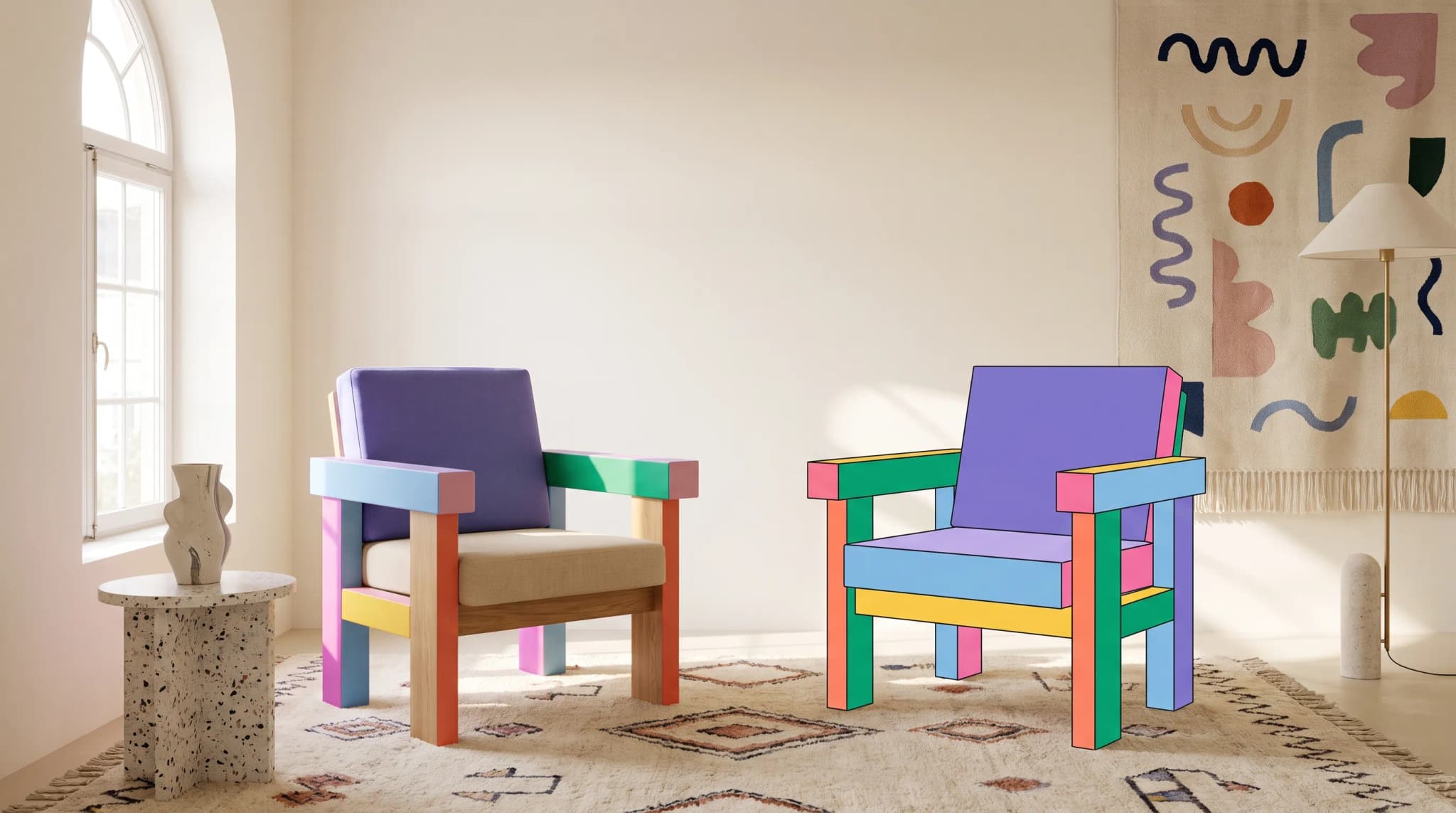
Real photography captures what exists. AI generates what could exist. That distinction matters more for some products than others.
A photograph of a walnut dining table shows the actual grain pattern, the precise color under specific lighting, the exact way light reflects off the finish. An AI render shows a plausible version of these things—often a slightly idealized one.
For B2B buyers placing large orders, that difference can translate into returns and disputes—if a render is the only thing they ever see. The answer isn't to avoid AI; it's to use it for breadth and speed, then back the final material decision with accurate imagery or physical samples. For early-stage browsing, custom configurations, or whole-room proposals, the gap often doesn't matter at all.
Our comparison of furniture photography studios vs AI turns that trade-off into a decision for each SKU and sales channel.
When AI Images Make Sense
Custom and Configurable Products
If you offer a sofa in 47 fabric options and 3 leg finishes, photographing every combination is economically absurd. AI excels here. Generate visualizations of configurations that don't physically exist yet. Buyers understand they're seeing a representation, not the actual product.
This is just as useful for materials and variants that aren't immediately available—a new colorway before stock lands, a fabric you haven't had photographed, or a finish that's still on order. Rather than leaving a listing blank or stalling a sales conversation until a sample arrives, you can show the variant now and confirm the detail with a swatch later.
The cost difference is substantial—traditional photography typically runs £1,000+ per SKU when you factor in studio time, equipment, and post-production. AI generation can reduce that by 90% or more. See how much you could save with our interactive calculator.
The key is setting expectations. Label these as "visualization" or "rendered preview." Provide physical swatches or samples for the materials that matter most to the final decision.
Lifestyle and Context Imagery
Showing a desk in a mid-century modern home office versus a contemporary open-plan space helps buyers envision fit. Creating those environments with real photography requires location scouting, set design, and logistics. AI can generate endless contextual variations quickly.
This works well when the product itself is photographed, then composited into AI-generated backgrounds. You maintain accuracy for the item while gaining flexibility for context.
For repeatable room scenes across a range, follow the catalog-scale lifestyle imagery workflow.
Early-Stage Concepts and Prototypes
Testing market interest before manufacturing? AI renders let you show concepts without building samples. This is particularly valuable for suppliers developing new lines or testing regional preferences.
Be explicit that these are concepts. "Coming soon" or "In development" framing prevents confusion.
High-Volume Catalogs, Quotes, and Proposals
This is where AI earns its keep for B2B suppliers. When you're standing up hundreds or thousands of SKUs—or assembling a quote or proposal that has to show a whole room of products together—photographing everything is neither fast nor affordable. AI generates a consistent, on-brand image for every SKU in a single batch, so a full catalog or a multi-product pack quote can be visualized in minutes instead of weeks.
For a sales team, that's often the difference between a proposal that goes out today and one that waits on a studio booking. Use AI to build the catalog and win the shortlist; keep physical swatches and samples in the loop for the materials a buyer will ultimately sign off on.
When Real Photography Is Essential
Material-Critical Products
Natural materials—solid wood, marble, leather, natural stone—have inherent variation that defines their character. AI tends to homogenize these textures or render them too perfectly.
If grain pattern, veining, or hide character is a selling point, photograph the actual pieces. Buyers of premium natural materials expect variation and want to see what they're getting.
High-Value Contract Orders
AI imagery is ideal for the early and middle of a large contract bid—building the catalog, generating room-set visuals for the proposal, and helping a buyer shortlist quickly. But when a hospitality group is finalizing 400 chairs for a hotel renovation, the imagery and samples behind that final sign-off should represent reality.
Use AI to accelerate the quote and win the shortlist; back the final material and finish decision with real photography or physical samples. Professional buyers expect accuracy, and surprising them with a product that doesn't match the imagery erodes trust quickly.
Craftsmanship-Focused Positioning
If your brand story centers on handmade quality, traditional techniques, or artisanal production, AI imagery can undercut that positioning. Authenticity in marketing should match authenticity in manufacturing.
This doesn't mean avoiding AI entirely, but being thoughtful about where it appears in your visual hierarchy.
A Practical Hybrid Approach
Most suppliers will benefit from combining both. Here's a layered approach:
- Hero product shots: Real photography. These are your primary product images—the first thing buyers see. Invest in quality here.
- Configuration variants: AI renders. Show fabric/finish options through generated previews, clearly labeled.
- Lifestyle contexts: Real product + AI environment. Composite actual product photography into generated room scenes.
- Detail shots: Real photography. Joinery, material close-ups, hardware—these should show actual quality.
Start with how AI furniture photography works to define the reference images and approval checks your hybrid process needs.
Disclosure: The Trust Factor
The furniture industry hasn't settled on disclosure standards for AI imagery, but best practice is moving toward transparency. Consider simple labels: "Rendered preview," "Visualization," or "Shown with AI-generated background."
This isn't just ethics—it's risk management. Buyers who feel misled have long memories. Clear expectations upfront prevent disputes later.
The Bottom Line
AI imagery isn't a wholesale replacement for photography—but for the work that scales, it's the workhorse. Use it where it adds value without compromising accuracy: high-volume catalogs, quotes and proposals, configurations, contexts, and concepts. Protect authenticity where it matters: hero shots, materials, and craftsmanship.
The suppliers who get this balance right will move faster without sacrificing the trust that makes B2B relationships work.
Frequently asked questions
When should a furniture supplier use AI images instead of real photography?
When breadth and speed matter more than capturing an exact physical object. Custom and configurable products, where a sofa in 47 fabrics and three leg finishes can't be economically photographed. Variants not yet in stock, so a listing isn't left blank. Lifestyle context, with the real product composited into generated rooms. Early-stage concepts tested before manufacturing. And high-volume catalogs, quotes and proposals, where every SKU or a whole room of products needs a consistent image in a single batch.
When is real photography essential for furniture?
For material-critical products, where solid wood grain, marble veining or leather hide character is the selling point; AI tends to homogenize those textures or render them too perfectly. For the final sign-off on high-value contract orders, such as a hospitality group finalizing 400 chairs, where imagery and samples must represent reality. And for brands whose positioning centers on handmade or artisanal production, since generated imagery can undercut that story. Hero shots and detail shots of joinery and hardware should also be real.
How much cheaper is AI image generation than furniture photography?
Traditional photography typically runs £1,000 or more per SKU once studio time, equipment and post-production are counted. AI generation can reduce that by 90 percent or more. The saving is largest on configuration variants and catalog-scale work, where photographing every combination was never realistic, so the real alternative was a blank listing or a stalled sales conversation rather than a photo. For hero and material shots the calculation is different because accuracy, not cost, is the deciding factor.
Should furniture suppliers disclose AI-generated product images?
Yes. The industry hasn't settled on a standard, but best practice is moving toward transparency. Simple labels work: rendered preview, visualization, or shown with AI-generated background, plus coming soon or in development for concepts. This is risk management as much as ethics. B2B buyers placing large orders have long memories, and a delivered product that doesn't match the image leads to returns and disputes. Set expectations up front and back the materials that matter with physical swatches or samples.
Ready to showcase your furniture to qualified B2B buyers? Talk to our team and start building your product catalog today.